.svg)
.svg)

Internet Facing Applications
Protect Your Most Exposed Applications
Prevent exploits and malicious code from ever running inside the application.
Book a demo
Internet-Facing Applications Are the First to Break

Zero-Day & No-CVE Attacks
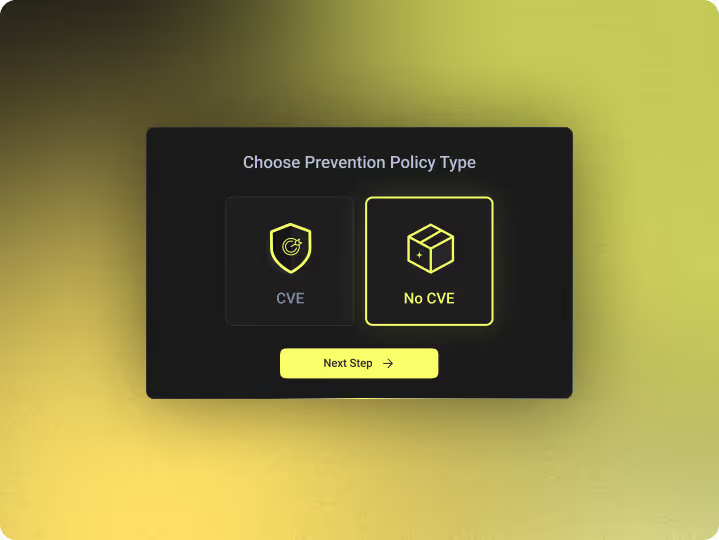
Traditional tools depend on known signatures or CVEs. 70% of real-world attacks don’t have a CVE.

The Exposure Window
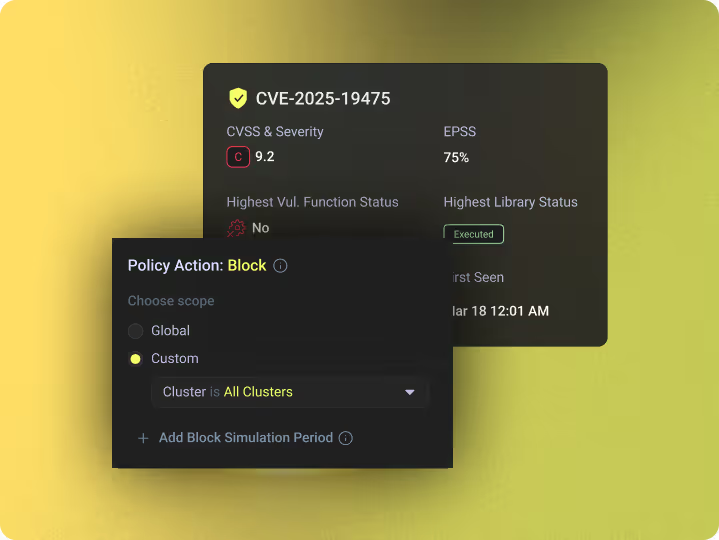
Even when a vulnerability is known, patching takes time. Attackers move much faster than fixes.

WAF is Not Enough
WAFs can’t see what actually executes inside the application once traffic is allowed.
True Runtime Prevention
Raven stops malicious code inside the application, at execution time.
- Prevents malicious code before it runs
- Works with or without a known CVE
No Exposure Window
Stay protected immediately, even while fixes are pending.
- No code changes required
- No emergency patch cycles
- Protection applies instantly in production.
Runtime-Aware Risk Reduction
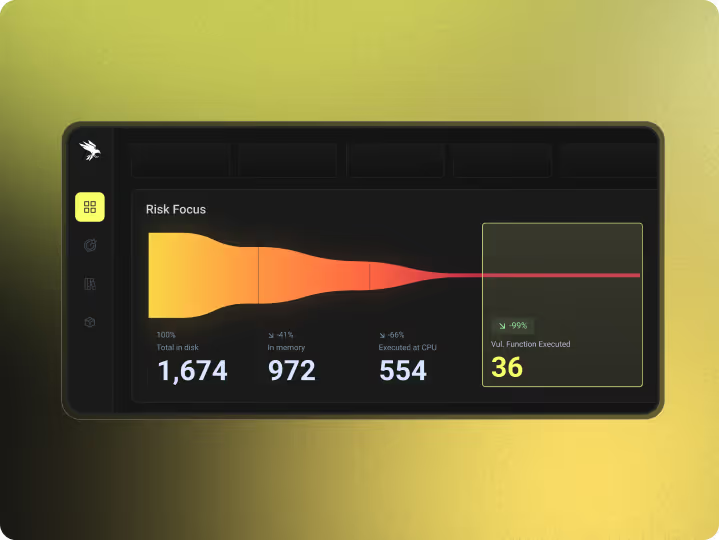
Raven stops malicious code inside the application, at execution time.
- Prevents malicious code before it runs
- Works with or without a known CVE
1 in 8 Billion
1 false positive in 8 billion events
<0.2% CPU
Best in class performance
Protect Your Most Exposed Applications
Book a demo
Incident Analysis
Explore Node2Shell (CVE-2026-111497), a Node.js Brotli vulnerability that can enable remote code execution. Learn the attack paths, root cause, and fixes.
Read more
Incident Analysis
Explore PHP2Shell, CVE-2026-109618 and CVE-2026-109619, how attacks reach PHP before application code runs, and why runtime security matters.
Read more
Security
AI is exposing the limits of CVE-based SCA and ASPM. Learn how runtime security helps protect third-party code beyond known vulnerabilities.
Read more
