.svg)
.svg)

Runtime Prevention
Stop malicious code from being executed. CVE or No CVE.
Prevent exploits and malicious code from ever running inside the application.

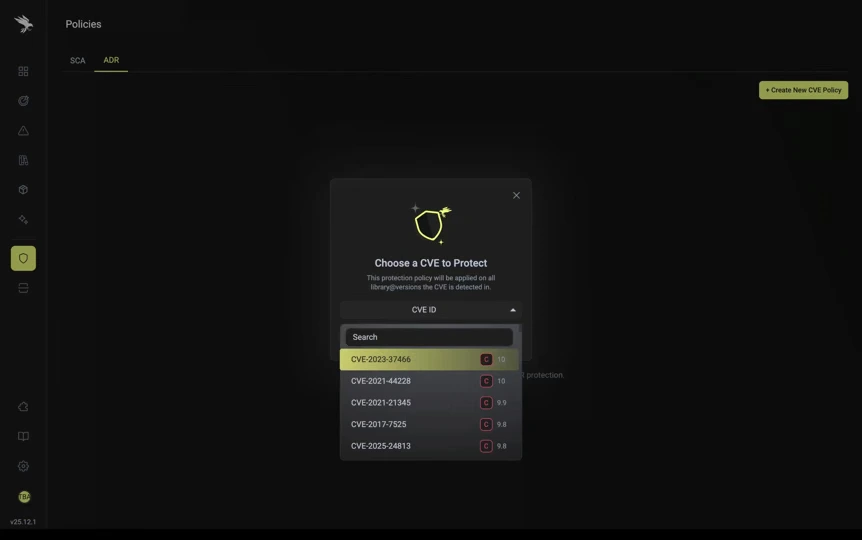







Attacks Move Faster Than Patches
Attackers now weaponize vulnerabilities within hours of discovery - often before a CVE, patch, or detection rule exists. AI-assisted exploit generation is accelerating the threat, making proactive zero day attack prevention and zero day protection critical to stopping attacks before they spread.
70% of Exploits Have No CVE
To keep pace with sophisticated attackers and secure modern cloud applications, organizations must detect attacks without relying on existing CVE signatures. Signature-free runtime security protects against both known CVEs and CVE-less attacks, stopping exploit behavior that traditional signatures and WAF rules miss.
WAF is not enough
WAFs operate outside the application and rely on known patterns, signatures, and request inspection. Modern attacks execute inside application logic, often after the request is already allowed. Once execution moves in-process, WAFs are blind.
Features
Stop Exploits with One Click.
Raven prevents abnormal execution at runtime before malicious code executes.
No code injection. No instrumentation. No signatures. No WAF rules. No reactive patch cycles.
No code injection. No instrumentation. No signatures. No WAF rules. No reactive patch cycles.
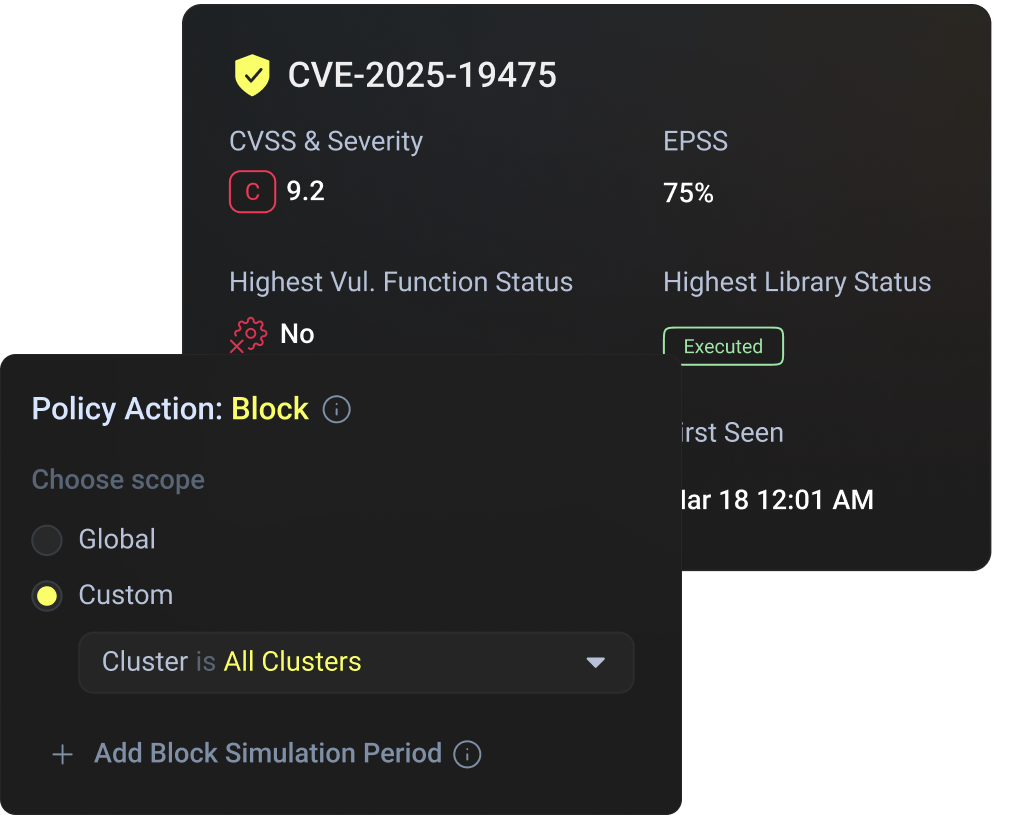
Stop CVE Exploits
When a known CVE is exploited, Raven prevents the exploit at the exact moment it occurs. This approach provides runtime virtual patching, stopping exploitation in real time without relying on WAF rules or signatures, and helping reduce risk while organizations work to deploy official patches.
.png)

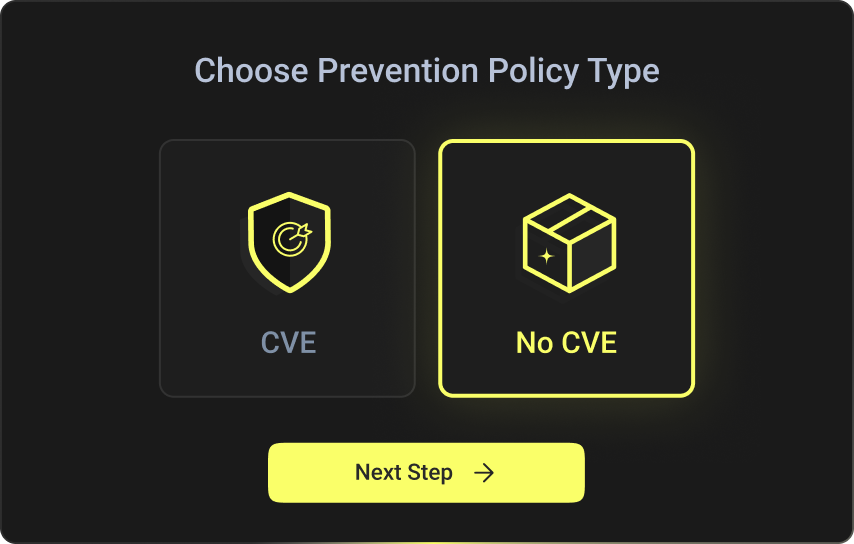
Stop CVE-less Exploits
Even when no CVE exists, exploits still alter an application’s execution flow. Raven detects these abnormal execution patterns at runtime and prevents the exploit at the exact moment it occurs. This behavior-based approach enables attack prevention without relying on known vulnerabilities, signatures, or CVEs.


“The new reality is that zero-days are inevitable so having Raven blocking execution deviations means real protection”
Pippin Wallace
Security Leader at Favor Delivery
Security Leader at Favor Delivery




.png)


Comparing Runtime Prevention to your current ASPM tool?
Frequently Asked Questions
What is Runtime Prevention?
.svg)
Runtime Prevention is a runtime security approach that stops exploits at the moment it attempts to execute inside an application. Rather than relying on signatures, known indicators, or post-incident detection, it continuously monitors application behavior and blocks abnormal execution in real time. By preventing exploitation as it occurs, Runtime Prevention helps stop both known CVE-based attacks and previously unknown threats before they can impact the application.
Can Runtime Prevention Stop Zero-Day Exploits?
Yes. Runtime Prevention does not rely on prior knowledge of an exploit. If an attack causes abnormal execution inside the application, it is blocked immediately, even if the vulnerability has never been disclosed. This behavior-based approach enables zero day attack prevention by stopping exploitation at runtime rather than relying on known CVEs, signatures, or threat intelligence.
How does Runtime Prevention stop exploits?
Runtime Prevention blocks exploits when they attempt to alter an application's normal execution flow. It continuously observes how the application executes code and identifies abnormal behavior at runtime. When an exploit attempts to manipulate execution, the system prevents the exploit from running, stopping the attack before damage occurs.
Does Runtime Prevention require a known CVE?
No, Runtime Prevention does not require a known CVE. It protects applications by detecting abnormal execution behavior rather than matching vulnerability signatures or known indicators. This approach enables protection against known vulnerabilities, zero-day exploits, and CVE-less attacks, including threats that have not yet been publicly disclosed or documented.
How is Runtime Prevention different from detection-based security?
Runtime Prevention differs from detection-based security by blocking malicious activity during execution rather than alerting after it occurs. While detection tools focus on identifying suspicious behavior and generating notifications, Runtime Prevention actively stops exploitation in real time. This reduces the opportunity for attackers to execute exploits and impact the application.
Where is Runtime Prevention typically deployed?
Runtime Prevention is typically deployed on internet-facing applications and servers that are exposed to external threats. These environments are frequent targets for exploitation attempts and often face the greatest risk from known and unknown vulnerabilities. Deploying protection at runtime helps prevent attacks at the point where malicious execution would otherwise occur.
Is Runtime Prevention suitable for internal or non-internet-facing applications?
Yes, Runtime Prevention is suitable for internal and non-internet-facing applications. While it is commonly deployed on internet-exposed workloads, the same runtime protections can help secure internal services, APIs, and backend systems. Any application that processes data or could be targeted through exploitation may benefit from runtime protection.
How is Runtime Prevention different from WAF?
Runtime Prevention differs from a WAF by operating inside the application where code execution occurs. WAFs analyze requests from outside the application and rely on rules, signatures, or traffic patterns to identify threats. Runtime Prevention monitors execution behavior directly and can stop exploit activity that reaches the application and attempts to execute exploits.
What types of attacks can Runtime Prevention block?
Runtime Prevention can block a broad range of exploit techniques by identifying malicious behavior inside running applications, libraries, frameworks, and runtime execution paths. Coverage includes remote code execution, command injection, deserialization exploits, template injection, supply chain attacks, malicious package behavior, and zero day exploit activity. Protection is based on runtime execution behavior rather than signatures, payloads, CVEs, or attack patterns.
Does Runtime Prevention rely on signatures or rules?
No, Runtime Prevention does not rely on signatures, static rules, or reactive patching. Instead, it analyzes application execution in real time to identify behavior associated with exploitation. Because protection is based on how code executes rather than predefined attack patterns, it can stop both known and previously unseen threats without requiring signature updates.
Does Runtime Prevention require application code changes?
No, Runtime Prevention does not require application code changes. It protects applications without modifying source code, recompiling binaries, or requiring developer instrumentation. This allows organizations to deploy protection without changing existing development workflows while maintaining visibility into application execution and exploit activity at runtime.
Can Runtime Prevention break applications?
No, Runtime Prevention is designed to block malicious execution paths while allowing legitimate application behavior to continue normally.
Where does Runtime Prevention run?
Runtime Prevention runs within the application environment where code execution occurs. By monitoring execution in real time, it can identify and stop exploit activity at the point of attack. This approach is suitable for cloud-native applications, containers, virtual machines, and traditional application deployments across a wide range of environments.
Is Runtime Prevention only for production environments?
No, Runtime Prevention is not limited to production environments. While it is most commonly deployed in production to stop live attacks, it can also be used in staging and pre-production environments. This allows organizations to validate protections, evaluate behavior, and strengthen security before applications are released.
Who should use Runtime Prevention?
Runtime Prevention is designed for security teams that want to actively prevent exploitation in running applications, rather than simply detect it after the fact.
How does Runtime Prevention complement CI/CD security?
Runtime Prevention complements CI/CD security by providing protection after software is deployed. CI/CD security helps prevent vulnerable code and misconfigurations from reaching production, while Runtime Prevention stops exploit activity that still reaches running applications. Together, they provide a layered prevention strategy that protects applications before deployment and during execution.
Resources

Incident Analysis
October 23, 2026
Explore Node2Shell (CVE-2026-111497), a Node.js Brotli vulnerability that can enable remote code execution. Learn the attack paths, root cause, and fixes.
Read more
Incident Analysis
October 22, 2026
Explore PHP2Shell, CVE-2026-109618 and CVE-2026-109619, how attacks reach PHP before application code runs, and why runtime security matters.
Read more
Security
October 12, 2026
AI is exposing the limits of CVE-based SCA and ASPM. Learn how runtime security helps protect third-party code beyond known vulnerabilities.
Read more
